Psychotherapy for Chronic Pain
You may have already tried many things to eliminate your pain.
You may have heard conflicting opinions from experts, received multiple diagnoses, or been given explanations that made sense but did little to change your pain.
We take a different approach. Recovery doesn’t have to depend on finding the solution that makes pain disappear. Together, we focus on understanding the processes that are keeping pain active and working with your body and mind to change them.
Here’s how we work with chronic pain.
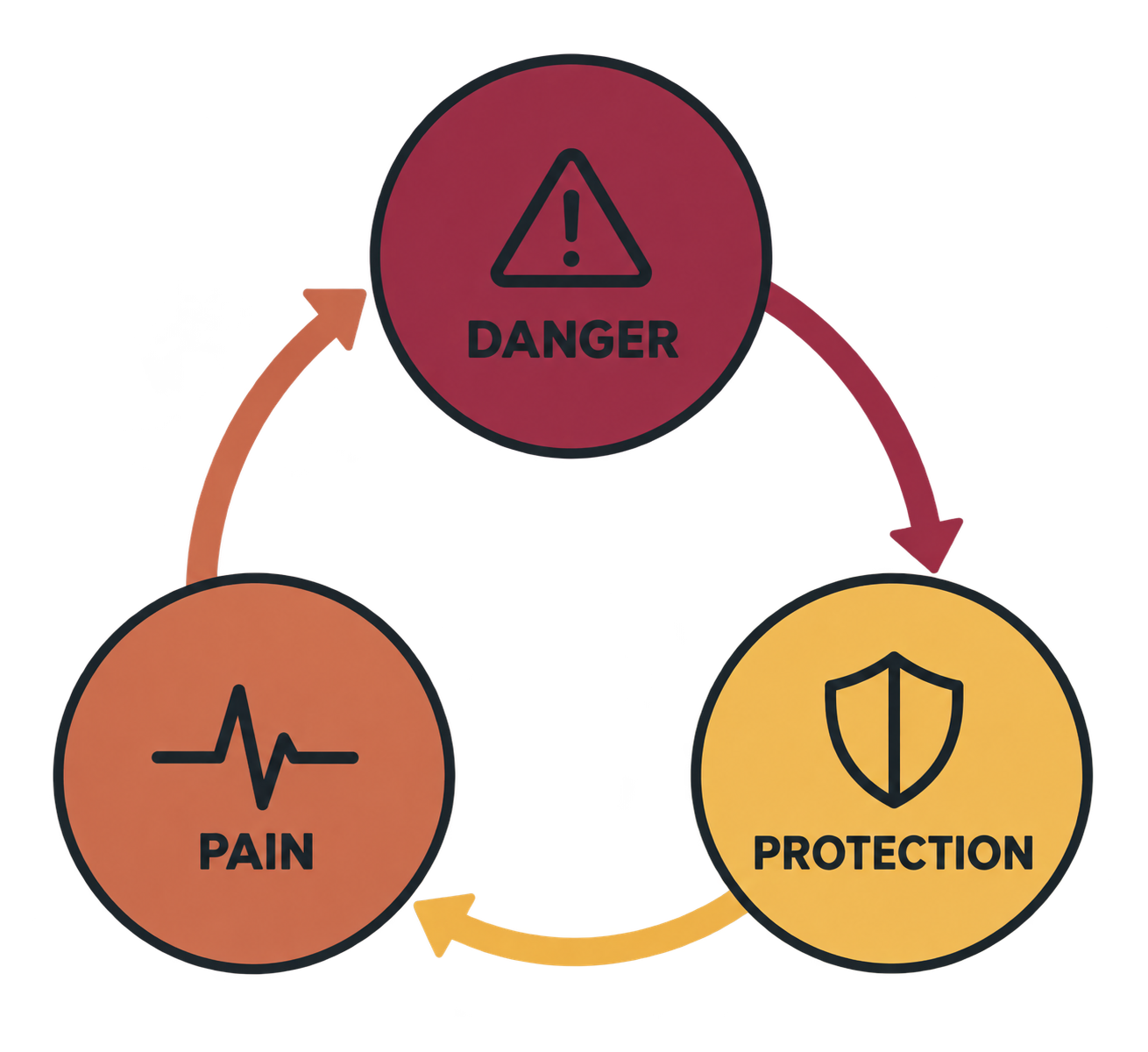
Pain is a protective response.
Pain is generated by the brain as part of the body's protective system. When the brain perceives danger, pain is the way it alerts us and motivates us to protect ourselves.
Sometimes, the brain learns to keep protecting us with pain long after the original threat has passed. This may mean that any physical damage that was present has already healed. Pain can persist in the absence of physical damage.
In some cases, it's possible the danger was not physical. Fear, chronic anxiety, stress, trauma, difficult emotions, past experiences, and learned expectations can all influence what the brain and body perceive as threatening.
The principles behind this work are grounded in neuroscience and supported by clinical research showing that many forms of chronic pain can be significantly reduced, and in some cases resolved, by changing the patterns that maintain them.
'So are you saying that the pain is all in my head?'
This is probably the most often asked question from people learning about the biology of pain. We have to be honest and say, 'yes — all pain is produced by the brain — no brain, no pain!' This doesn't mean for a second that it is not real — much to the contrary — all pain is real. In fact, anyone who tells you 'it' is all in your head, implying that therefore 'it' is not real — does not understand biology.
Explain Pain, David Butler & Lorimer Mosley, p. 70
Understand what keeps your pain going.
We begin with an in-depth assessment, looking at what may be contributing to the pain cycle, including:
what you have learned to believe about your pain
fear and anticipation of symptoms
patterns of monitoring or avoiding pain
chronic stress and anxiety
difficult emotions and emotional avoidance
trauma and significant life experiences
learned associations between pain and particular movements, activities, or situations
Together, we develop a roadmap for recovery.
Reduce fear and change learned pain responses.
Pain itself can become a source of danger.
You may begin anticipating symptoms, monitoring your body closely, avoiding activities, or expecting certain movements and situations to cause pain. These responses can reinforce the brain's expectation that protection is still needed.
We work to change these learned patterns by:
reducing fear of symptoms
questioning beliefs about damage and fragility
changing expectations of pain
reducing hypervigilance
safely creating new experiences of movement, sensation, and activity
Pain Reprocessing Therapy (PRT) is one of the methods we use to help change these learned pain responses.
Address the deeper sources of threat.
Fear and vigilance fuel ongoing pain, and it goes deeper than just the fear of pain itself.
Chronic anxiety, trauma, shame, guilt, anger, unresolved emotional experiences, relationship patterns, and years of living under pressure can all contribute to a persistent sense of threat.
We identify and work through these patterns so that your brain and body no longer have to remain in a constant state of protection.

Reduce pain and restore quality of life.
As the patterns maintaining pain begin to change, you may experience:
less frequent or less intense pain
fewer flare-ups
less fear and preoccupation with symptoms
greater confidence in movement and activity
greater trust in your body
returning to activities you have avoided or stopped
significant pain reduction or, for some people, resolution of pain