Recovery from chronic pain is possible.
Persistent pain can be significantly reduced, and in some cases, resolved. We work with you to break the cycle that keeps pain going so you can get back to living your life.
Why does pain persist?
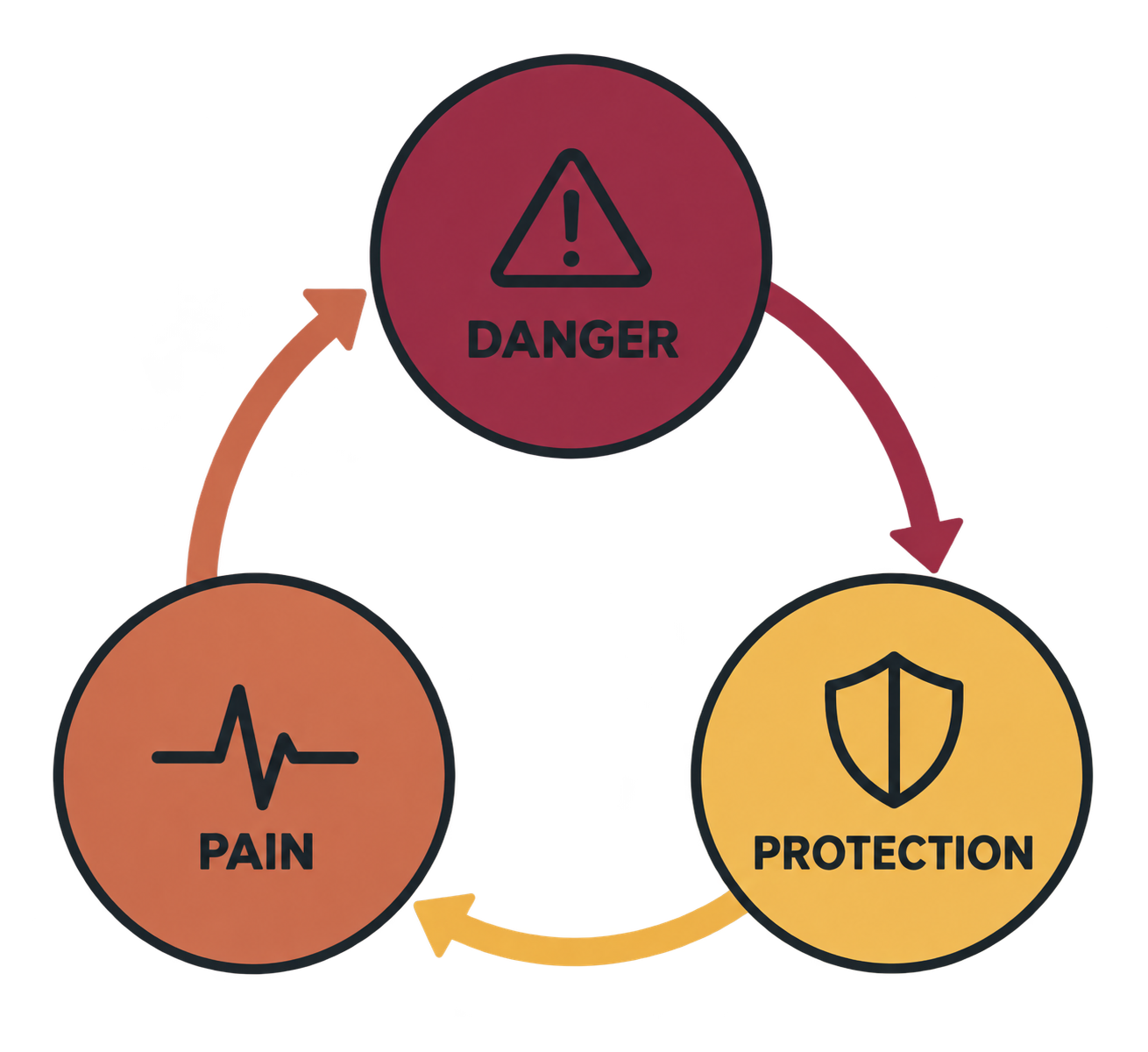
Pain is part of the body's protective system. It alerts us when the brain perceives danger. Sometimes, the brain learns to protect us with pain long after the original threat has passed.
And danger isn't only physical. Chronic anxiety, stress, trauma, and emotions associated with threat can all teach the brain and body that protection is still needed.
Psychotherapy targets the patterns that keep this protective cycle going: reducing fear, changing learned pain responses, processing emotions and trauma, and helping the brain and body learn lasting safety.
Learn How It Works.
What does the research show?
A growing body of research shows that many forms of chronic pain can improve significantly when the brain and nervous system processes maintaining pain are directly addressed.
In a randomized clinical trial of Pain Reprocessing Therapy for chronic back pain, 98% of participants improved and 66% were pain-free or nearly pain-free after four weeks of treatment. The benefits were largely maintained at one year.
Research across chronic pain conditions also continues to show the importance of factors such as pain-related fear, expectations, emotional processing, and learned responses.
In a randomized pilot trial of 35 adults with chronic back pain, 63.6% receiving a mind-body treatment were pain-free at six months, compared with 25% receiving mindfulness-based stress reduction and 16.7% receiving usual care.
A published case series also documented substantial improvements in three patients with chronic migraine following Pain Reprocessing Therapy, after inadequate responses to standard treatments. Headache or migraine frequency fell from 18–30 days per month to 3–5 days per month.
Learn more about how we work with chronic pain: How It Works.
Would you like to discuss if this might be the right approach for you?
We invite you to book a free consultation.